
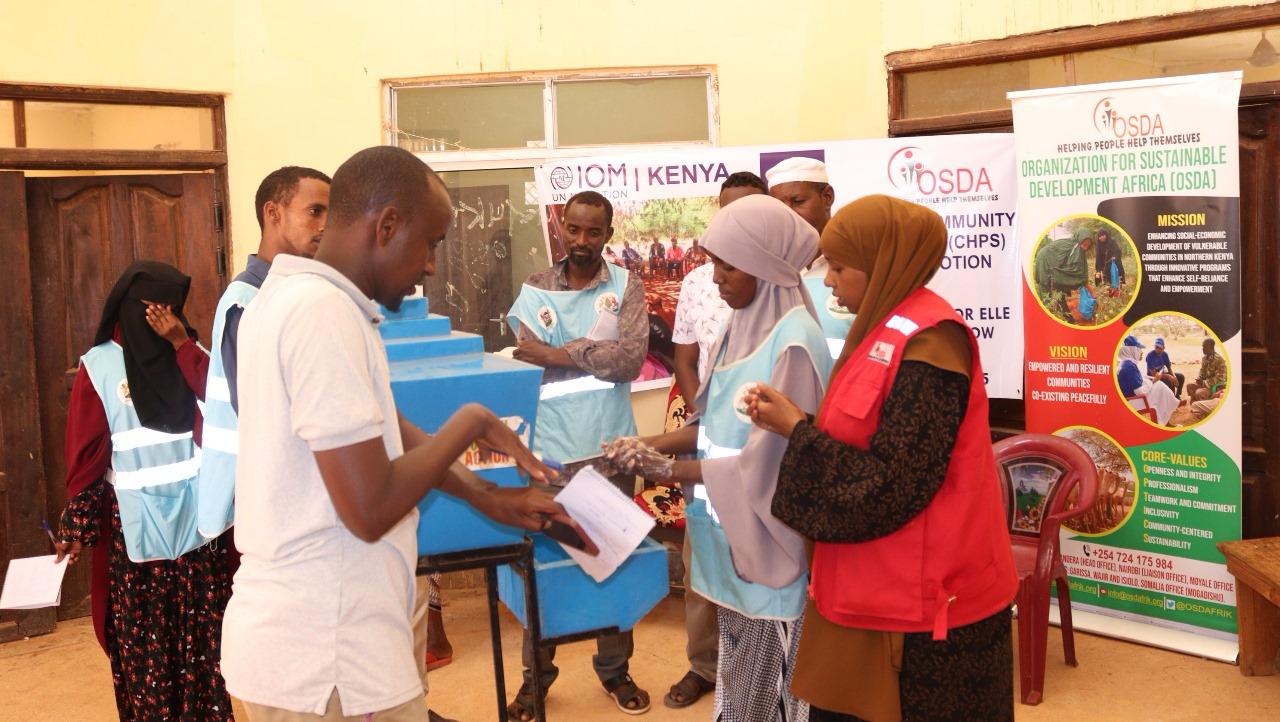
Thursday 27th February, marked a significant milestone in our efforts to strengthen local capacity for sustainable health practices under the Daris Wacan project, RESILIENCE-BUILDING AMONG CROSS-BORDER COMMUNITIES THROUGH ENHANCED ACCESS TO WATER AND LIVELIHOODS. OSDA successfully conducted a comprehensive sensitization session for Community Health Promoters (CHPs) at Bulla Hajji, engaging 10 CHPs in a cornerstone activity that will enhance community-driven health initiatives.
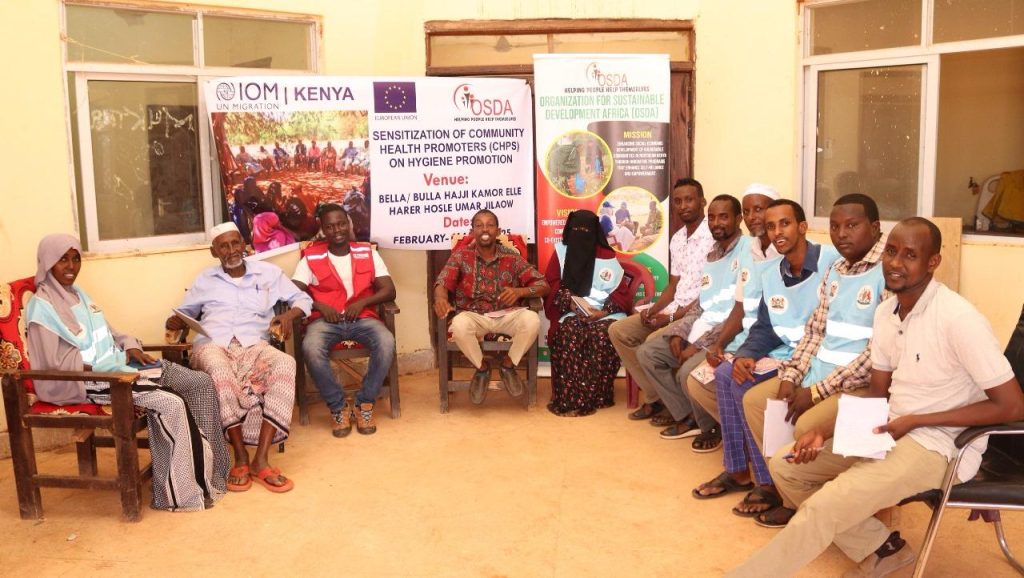
Building Knowledge for Sustainable Health Practices
The session provided in-depth training on crucial hygiene promotion components, with a focus on proper handwashing techniques, sustainable sanitation practices, safe water collection, storage, and handling, as well as effective disease prevention strategies. CHPs actively participated in practical demonstrations, role-playing scenarios, and group discussions, reinforcing key theoretical concepts and ensuring a hands-on learning experience.
Creating a Network of Community Advocates
By equipping these community leaders with essential knowledge and practical skills, OSDA has established a network of empowered advocates dedicated to promoting hygiene awareness in their respective communities. Each CHP received comprehensive educational materials and visual aids to support their outreach efforts, ensuring a consistent and widespread dissemination of vital health messages.
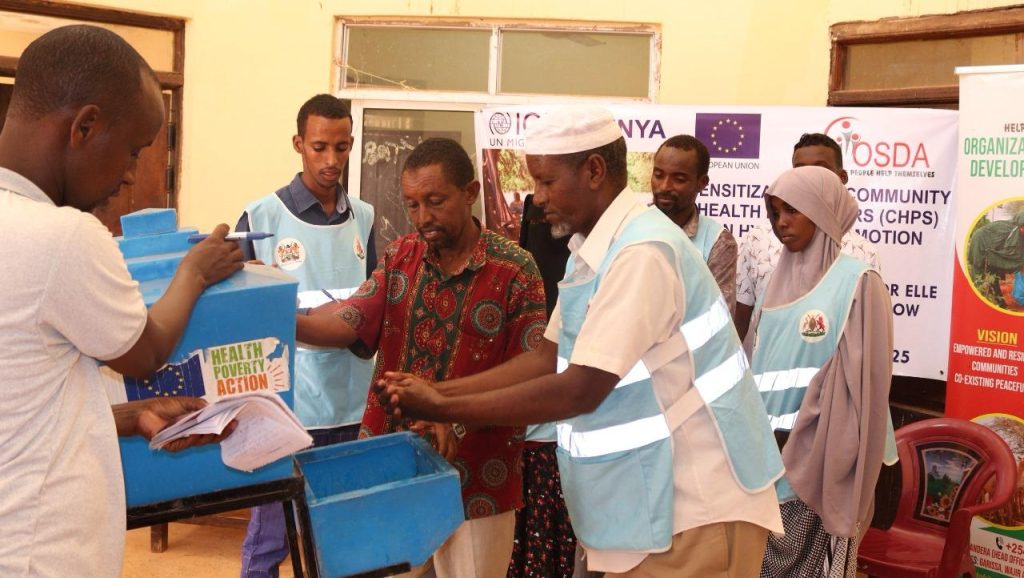
ecentralizing Health Promotion for Greater Impact
This training represents a crucial step in operationalizing national health promotion policies at the grassroots level through established community health strategy systems. By localizing these interventions, OSDA ensures that health promotion efforts remain culturally appropriate and responsive to the specific needs of the cross-border communities served by the project.
Leveraging Local Expertise for Effective Training
The workshop benefited significantly from the expertise of the Community Health Assistant (CHA) in charge of the community unit. The CHA facilitated sessions using participatory teaching methodologies that encouraged knowledge sharing among participants. By bridging technical knowledge with local context, the training built upon existing community practices while introducing evidence-based improvements to health promotion.
Sustained Support and Future Plans
Follow-up sessions have been scheduled to monitor implementation progress and provide additional support to the CHPs as they begin their community education efforts. This ongoing engagement ensures that the impact of the training extends beyond the initial session, fostering long-term improvements in community health and resilience.
Through initiatives like this, OSDA continues to advance its mission of empowering communities with the knowledge and resources needed to build healthier, more resilient futures. Stay connected for more updates on our work in the region.
