
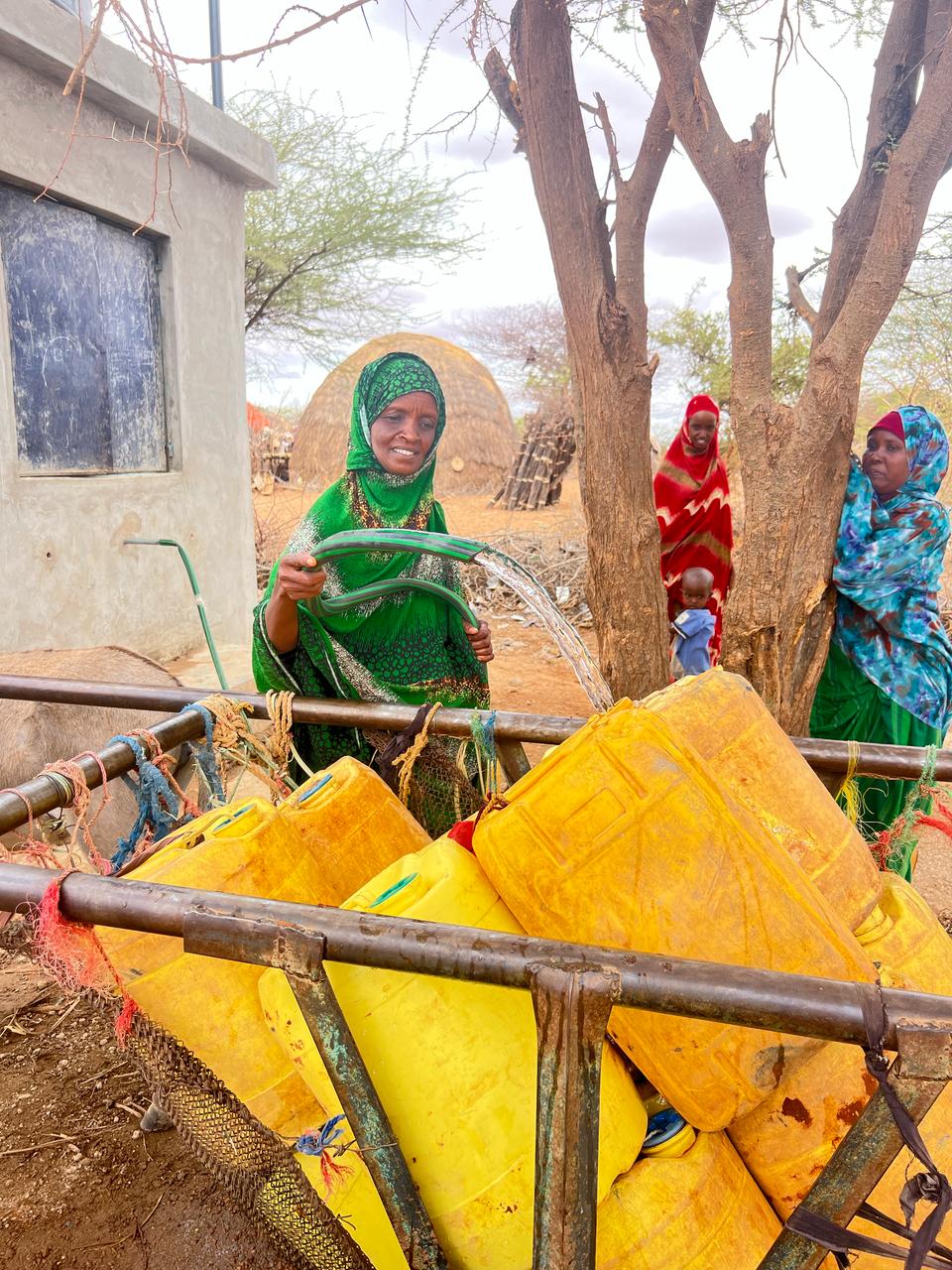
In the arid landscapes of Mandera County, the community of Bulla Hajji faced a daunting challenge for two long years: their solar-powered water pump had failed. Forced to rely on a costly diesel generator, the community consumed 7,200 litres of diesel at Ksh 200 per litre, spending nearly Ksh 1.44 million to meet their basic need for water. This financial burden weighed heavily on families already grappling with economic hardship, pushing them to make heart-wrenching choices between fuel, food, and medicine. The ripple effects were profound—school attendance dropped, local businesses struggled, and tensions rose as resources dwindled.
But hope has returned to Bulla Hajji, thanks to the transformative DARIS WACAN project—”Resilience Building Among Cross-Border Communities Through Enhanced Access to Water and Livelihoods.” Funded by the European Union and implemented by the International Organization for Migration (IOM) alongside its partner, the Organization for Sustainable Development Africa (OSDA), this initiative restored the community’s solar pumping system between February 17 and 19, 2025. The rehabilitated system now efficiently pumps water from a shallow well to an elevated tank, supplying two upgraded water kiosks fitted with additional taps. These kiosks serve 1,764 residents, including 841 males, 917 females, and 6 persons with disabilities, ensuring equitable access to clean, sustainable water.
Sharifa Malele Hassan, the water kiosk operator, captures the profound impact of this change: “This has been a life-changing moment. For years, we lived in constant fear—wondering if we could afford fuel to pump water or if we would have to go without. We rationed water, prioritizing drinking over washing or farming. Now, water is flowing, and with it, life has returned to our village. Our children laugh and play without the fear of thirst, and our families can plan for a better future. This is not just water—it is hope, dignity, and survival.”
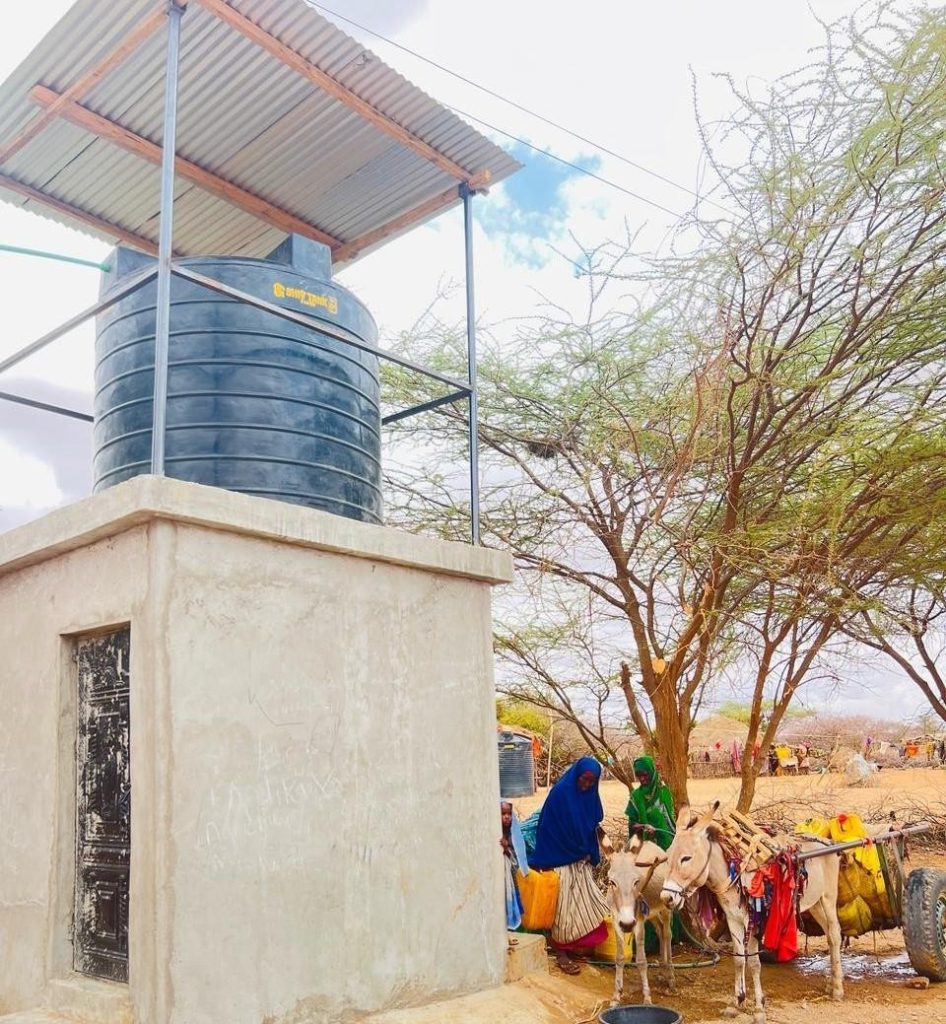
The restoration of the solar pumping system has sparked a wave of positive change in Bulla Hajji. Women, who once spent hours collecting water, now have time to engage in income-generating activities and care for their families. Reliable irrigation has revitalized agricultural initiatives, boosting food security and livelihoods. At the local school, attendance has soared to 546 pupils (264 males, 214 females) and 10 male teachers, as children are freed from water-fetching duties. Most significantly, the Ksh 2,000 daily diesel expense has been eliminated, allowing families to redirect savings into healthcare, education, and small businesses, strengthening the local economy.
The success of the DARIS WACAN project in Bulla Hajji demonstrates the power of well-planned, sustainable interventions. By restoring a single solar water system, OSDA and its partners have revitalized an entire community, proving that small changes can yield profound, lasting impact. This initiative is a testament to the potential of renewable energy to break the cycle of costly short-term fixes and pave the way for resilience and self-sufficiency.
As OSDA continues to champion sustainable development across Africa, we remain committed to empowering communities like Bulla Hajji. With continued investment in renewable energy infrastructure, we can transform more lives, ensuring access to clean water, fostering economic growth, and building a brighter, more resilient future for all.
