

At OSDA, we are proud to have led the implementation of the Green Climate Economy & Adaptation Project (GCEAP) in Garissa County, Kenya, with generous funding from IOM and World Vision Kenya. This project has played a crucial role in enhancing climate resilience and building sustainable livelihoods for vulnerable communities.
Our focus was on empowering over 1,000 households in Dolaal, GubaKibir, and Alikune. By nurturing green economic opportunities, we helped both displaced and host communities develop the resources needed to adapt to climate change and build more resilient futures.
A key intervention was our training on the production of eco-friendly briquettes, targeting women- and youth-led SMEs. Over 100 women and youth were trained to process firewood from the invasive Prosopis species into renewable fuel sources. This initiative not only provides a form of employment but also supports environmental conservation.
The transformation through Prosopis briquette production has been remarkable. By repurposing invasive wood into an affordable and clean energy source, we reduce dependence on firewood and protect local forests. These briquettes burn for up to 4 hours, making them cost-effective and smokeless, with no carbon monoxide emissions—offering cleaner, safer energy for households.
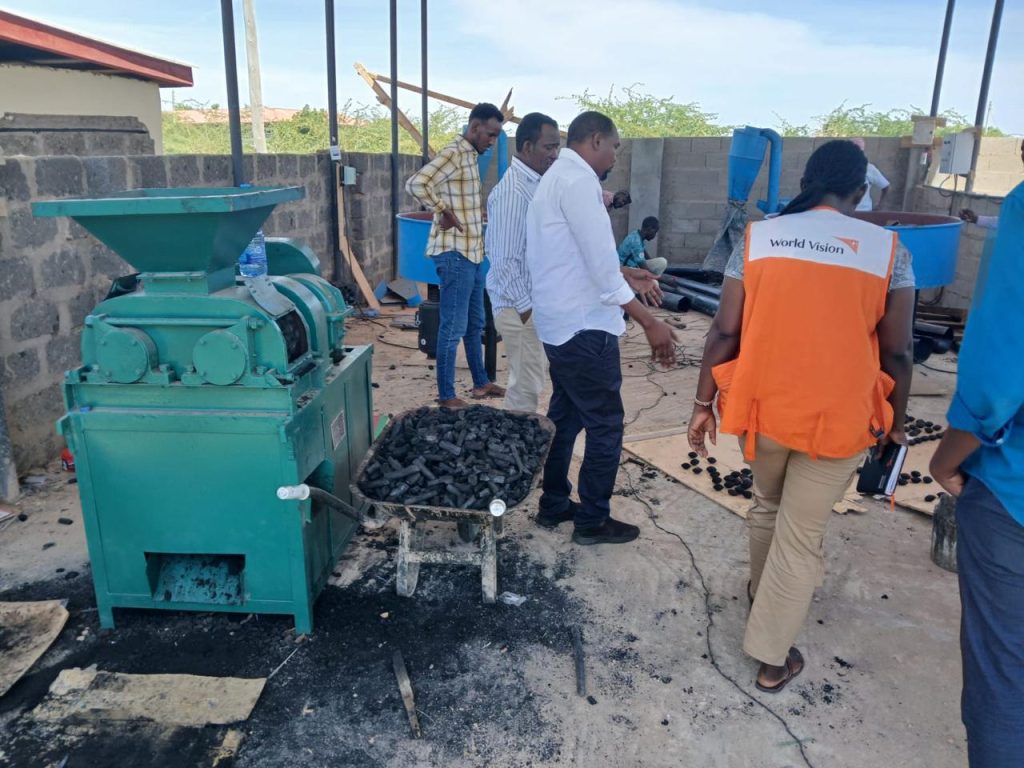
As part of our long-term sustainability plans, we installed a full-scale briquette production unit in Garissa Township. This unit is managed by trained youth and women, contributing to local economic growth and energy independence.
To date, we have distributed over 1,000 5kg bags of briquettes to households in Dolaal, GubaKibir, and Alikune, helping these families access affordable and reliable energy while reducing environmental damage.
At OSDA, empowering women and youth is at the core of our mission. Over 40% of our training participants were women, who are now taking leadership roles in production management and decision-making within their communities.
Regular progress monitoring was essential to ensure the success of the project. With the involvement of local leaders and community members, we fostered accountability and encouraged continuous strategic planning for long-term success.
Thanks to the local ownership of the project, in partnership with IOM, World Vision Kenya, and local CBOs, the impacts of GCEAP will be felt for years to come. The legacy of this project marks a significant step toward a green economy and climate resilience in Garissa County, opening up pathways toward a more sustainable future for all.
